|
|
Joined: Sep 2006
Posts: 141
Contributor
|
OP

Contributor
Joined: Sep 2006
Posts: 141 |
Chevy 1962 235 - code next to the distributor: F0511A
Does anybody have a link or know what the 'A' suffix letter means?
I am trying to find out what this engine came out of.
It has hydraulic lifters, so I assume it's from a car with powerglide.
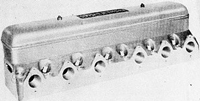
The head is not the 848 but the 913 with lower compression ratio used in cars, according to the casting numbers index on this site.
Why would the ratio be lower for automatic transmissions and is this the head with the larger intake valves?
What stock comp ratio does it have?
And one more: What is the compression ratio of a late 261 with 848 head, not milled?
Thanks for any input...
|
|
|
|
|
Joined: Dec 2000
Posts: 3,332
1000 Post Club
|
|
1000 Post Club
Joined: Dec 2000
Posts: 3,332 |
Motors Manual(s) (blue) at the Library, have all that information. There on e-bay all the time for $20.  If your going to work on a motor vehicle in the USA, you'll need to have one or more & how to use it/them. Good luck. 
John M., I.I. #3370
"There are no shortcuts to any place worth going". -Anon
|
|
|
|
|
Joined: Sep 2006
Posts: 141
Contributor
|
|
OP
Contributor
Joined: Sep 2006
Posts: 141 |
My small town library doesn't have a motor reference section.
My 1960 truck shop manual helped me for many years working on the engine, but it doesn't have the answers to these particular questions.
The best ideas, suggestions and answers however I have always gotten from forums such as this.
I still can't say for sure if this is a truck or car engine.
I figured somebody who has worked on a lot of these engines, reading this will have a simple quick answer from the top of their head.
Thanks for your input, though.
|
|
|
|
|
Joined: Dec 2000
Posts: 3,332
1000 Post Club
|
|
1000 Post Club
Joined: Dec 2000
Posts: 3,332 |
With 'juice' lifters It's probably from a passenger car.
The number by the distributor was used for the VIN # for many years. With just one letter in front, It's past that era.
If you read the casting # by the fuel pump & check the left margin listings, you may find it.
John M., I.I. #3370
"There are no shortcuts to any place worth going". -Anon
|
|
|
|
|
Joined: Sep 2006
Posts: 141
Contributor
|
|
OP
Contributor
Joined: Sep 2006
Posts: 141 |
If you read my question again slowly, you may find I have been there already. I wouldn't bother anybody with an easy one like that.
No worries John, somebody might have a quick answer one day. Thanks for your valuable time.
Just can't find any more info but a previous post in the archives mentioning the suffix letter telling the application of the engine.
I have been driving this engine daily for 11 years now and it's history has always been a mystery.
It's probably the most reliable friend I ever had and it would be nice to one day know a little more about it's background.
One of the casting# website shows both high and low compression heads for this apparently car engine. Why I have not a clue.
Weird that the truck engine would use the higher compression head only.
Maybe a misprint and it's the other way around really - makes more sense to me.
|
|
|
|
|
Joined: Dec 2000
Posts: 3,332
1000 Post Club
|
|
1000 Post Club
Joined: Dec 2000
Posts: 3,332 |
The trucks had higher compression, as they carry more weight than passenger cars do etc. Your local Library can/will transfer the manual you need in for you to read. You may also copy the pages needed on the copy machine. The engines are the same otherwise & that letter may tell what factory it was made in is all. Perhaps Tom Langdon would know, as he worked there for many years.
John M., I.I. #3370
"There are no shortcuts to any place worth going". -Anon
|
|
|
|
|
Joined: Jul 2000
Posts: 1,613
1000 Post Club
|
|
1000 Post Club
Joined: Jul 2000
Posts: 1,613 |
Usually the stamped number behind the dizzy can help identify the engine, but thats not always the case with the later 235's. The date code is cast into the block near the starter. The casting number for the block is below and forward of the dizzy.
As far as I know, all 56-62 235's had the 848 head. 913 is an earlier head with very slightly less compression. Date codes for the heads are on the pass. side center.
Likely, its a late 235 that needed a new head, so they just grabbed what they could find. What size is the temp sending unit hole?
I don't know exactly what the comp. ratio would be on a 261 with 848 head, But I have CC'd a head and was in the process of finding out when I got sidetracked. The 848 head I checked was made in 1962 and had about an 82cc chamber volume. I believe the head gasket had a .055" compressed thickness, but I'd have to recheck that. The rest you can figure out for yourself.
I.I. #3174
|
|
|
|
|
Joined: Sep 2006
Posts: 141
Contributor
|
|
OP
Contributor
Joined: Sep 2006
Posts: 141 |
Did a little research and found this head years history:
3835913 head was used first on 235 1st Series 54/55 trucks and again on 235 58-62 cars (together with 848 heads).
3836848 head was used first on 235 2nd series 55 trucks.
My 913 head is dated 1958, which confirms this casting history.
Interesting, I guess we will never know why chevy used both heads for the later 235 cars.
A stock 235 - 913 has 7.5:1 comp ratio
A stock 235 - 848 has 8.25:1
According to a 56 article by McGurk that by itself brings almost 10% increase in hp for higher rpms.
Thanks for all the input and the online manuals...
|
|
|
|
0 members (),
611
guests, and
56
robots. |
|
Key:
Admin,
Global Mod,
Mod
|
|
|
|