And here I am now with the promised pictures, perhaps with the exception of the one of the inside profile of the runner. I haven't had my computer fired up yet this week (as I'm moving, on the girlfriends computer right now) so I'm still going after that. In roughly chronological order here is how I spent my wrenching hours this week:

The other team members resting up.

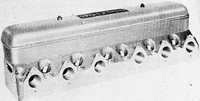
Intake, spare head, firebird ('81, trans am actually), computer setup for later tuning

Doing some early computer testing. There was a lot to do so every time i go slowed down somewhere I just switched over to working on something else for a bit. Here I'm running the engine with the MAP (manifold absolute pressure) sensor hooked to the intake, just to get an idea what sort of running pressures I should expect. I've never had a vacuum gauge on an engine before.

My surge tank. There are 4 lines running to it: low pressure feed (from stock mechanical pump, max 7psi), low pressure return (to tank), high pressure feed (EFI pump, ~50 psi @ WOT as it is vacuum referenced) and high pressure return from the regulator.

I'm not really a fan of brass fittings like these, there is a few places where you know they'll create restriction but they're all that is in the budget at the moment.

THIS is where I went wrong. The sealing is accomplished by the main o-ring in the middle. The four perimeter fasteners are through bolts with nuts on the underside with washers. They protrude into the tank, but I hoped with enough thread sealant or perhaps epoxy they'd seal and it would be sufficient for the low pressure in question. Not so. The access ended up being very difficult to correctly apply epoxy and the pressure was enough in the tank even with the return that I kept getting consistent small fuel leaks. And while this tank isn't on the side of the engine with the exhaust manifold it hangs directly above the exhaust cross over and near the starter. I cannot except anything but a perfect seal and ultimately this wasted enough time to stall the project for this weekend.

This mounting worked even better than I expected, it was rock solid without exceeding torque specs. For long term durability I think it needs a brace of some type, perhaps from the tapped hole by the dipstick running up to the threaded rod.

I should have taken more pictures of the assembly during pressure testing. I plumbed all the lines for the high pressure circuit and then tested this with a battery charger as a power supply. 48 psi is shown, this is adjustable and just the incidental pressure I was at then as I played with it. Not a single leak, all the o-rings and fittings checked out. Next into the car.
more pictures...