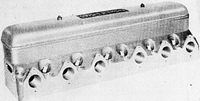
The set up I described earlier is for a race application and it should be adjusted for a street application. The traditional way of feeding a plenum on an inline engine has been from one end of the plenum. The big problem in this is that the cylinder close to the throttle body will run lean and the one furthest away will run rich. This can also be seen in the EGT readings if you do them for each cylinder. Another effect is costing hard earned HP
This is why the plenum shape is very important in getting the cylinders to balance out. Take a look at any of the modern plenums that are used in racing from the inline stuff to the Audi diesel race engine. They all have a slot (almost a restrictor to feed the plenum) and they are fed on the top or bottom and are usually curved around with the throttle body behind the head or in front of the head.
In this scenario it is important that the plenum is big enough. This also kills the velocity of the incoming air a bit, resulting in a higher and more equal pressure in the "main" plenum. I've tried making inlets with a shape closer to a flat/wide funnel, so the air would "ram-feed" the runners,i.e. keeping the velocity...but never found any hp in it, when the plenum volume was cut back the "straight-hitting ram-feed" did NOT compensate and the result was a net hp loss.
There are a couple of ways to size the slot. If you've got your intercooler tube and throttle body is the correct size, then you can base it on the intercooler pipe i.d using a chart. Plenums that have a simple slot just cut into the sheet metal will have a Cd of 0.6 Better designs will be higher, up to Cd 0.8.
Or you can get an approximate area in sq-in by using the formula:
Area = (cfm * 144)/(Cd * 4005 * sqrt(deltaP))
Where:
Cd - coefficient of discharge
deltaP - allowable pressure drop inH2O (0.5psi ~ 14")
And you can then check the approximate fps through the slot with:
fps = (cfm * 2.4)/Area