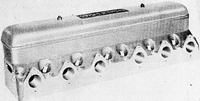
Afterthought: on the Gen-3 engines (250/292) the lump benefit (viz. reduced area traded off for improved port efficiency at the SSR) is also partially derived from the removal of an obstruction that doesn't exist in the stovebolt (235): the head bolt boss.
Many engines (Mini, Ford 2.0 L4) have been ported by insertion of a whole new port made from a chunk of Schedule 40 etc. right through the existing iron to intersect the throat at a good place. Since neither the head gasket surface nor the chamber wall is compromised, the seal between the new port and the casting only needs to be liquid-tight against thermostat pressure + safety (30 psi?).
The usual cautionary remarks about pre- and post- heating of cast-iron for welding of course apply, but I don't see why this has to be welded (i.e., fusion using ferrous rod), or even brazed, since mechanical strength isn't the problem. Good silver solder would permit this to be done with far lower temperatures (both pre-heat and actual work conditions), less warpage, less corrective machine work afterward, etc.