|
|
Joined: Nov 2008
Posts: 9
Active BB Member
|
OP

Active BB Member
Joined: Nov 2008
Posts: 9 |
Okay guys, I've been lurking and haven't really ever posted but I'm getting really close to starting on my engine swap and my turbo build. I'm pulling my old worn 250 and building it for the turbo application while the new 250 goes in and keeps my truck as a daily driver. I'm aiming for roughly 350hp/350 ft lbs torque give or take on either.
Now, I have a ton of questions I need answered and figured this would be the best place to come and get them answered.
Is there a set list anywhere of what all is needed for a turbo powered 250 engine?
What rebuild kit should I buy for my 250 to keep it a low compression engine (8:1)?
Is any machining required on the block, if so what?
From what I've read the older Buicks have turbos sized for our engines, would it be wise to get one of these and have it rebuilt?
What turbo would you recommend?
What blow-thru carbureutor would be my best buy (I still want to drive this daily)?
If you can answer any of these questions, give any tips, or links to any turbo 250 builds I would appreciate it tons! As I start building it I'll just update this thread and keep it as a project thread.
Thanks,
Dylan
|
|
|
|
|
Joined: Nov 2008
Posts: 9
Active BB Member
|
|
OP
Active BB Member
Joined: Nov 2008
Posts: 9 |
What manifolds would you get for this engine as well?
Links to the specific parts and/or kits would help greatly too.
|
|
|
|
|
Joined: Apr 2004
Posts: 3,595 Likes: 42
1000 Post Club
|
|
1000 Post Club
Joined: Apr 2004
Posts: 3,595 Likes: 42 |
dylan,
glad to hear you are onboard! i'd like to see you achieve your goal. there are alot of steps to getting to a good running turbo motor though. lots of decisions to be made.
350 hp is quite abit. mine only puts down 243 to the tires. but still it is workable.
a big decision to be made is the pistons. even stock cast pistons can take turbo boost fine, in moderation. let's say 6-7 lbs boost with no problems. but that boost will only get you to around 225hp @crank. for more boost/hp than you will need more boost, lets say 15 lbs @ 5000-5500 rpm. this takes a much tougher piston and timing control. so for this i recomend custom forged pistons from any of the manufacturers.
as for maniflods:
intake- offenhouser / water heated 4 bbl
exh- cast iron turbo unit or custom made. i use the cast iron unit.
make sure to use arp head studs for the head. rework the rods for strength. other than that the block just needs normal rebuild setup.
make sure your block has the larger oil plug in the galley ,1/4 pipe. if not add it when rebuilding it. this is to feed the turbo with oil.
this is a start for you. tom
Inliner Member 1716 65 Chevelle Wagon and 41 Hudson Pickup Information and parts www.12bolt.com
|
|
|
|
|
Joined: Apr 2004
Posts: 3,595 Likes: 42
1000 Post Club
|
|
1000 Post Club
Joined: Apr 2004
Posts: 3,595 Likes: 42 |
there is definately a cheaper way to get that same manifold.
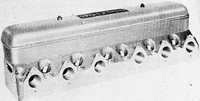
those pistons are standard bore. good find though.
you really need to get a good working relationship with a machine shop. they are ultimately going to do the work to your engine and you need to be able to trust them. so start looking. tom
Inliner Member 1716 65 Chevelle Wagon and 41 Hudson Pickup Information and parts www.12bolt.com
|
|
|
|
|
Joined: Apr 2004
Posts: 3,595 Likes: 42
1000 Post Club
|
|
1000 Post Club
Joined: Apr 2004
Posts: 3,595 Likes: 42 |
dang, really miss that edit function.
get the intake manifold from langdons stove bolt. and get the water heated unit. tom
Inliner Member 1716 65 Chevelle Wagon and 41 Hudson Pickup Information and parts www.12bolt.com
|
|
|
|
|
Joined: Apr 2004
Posts: 3,595 Likes: 42
1000 Post Club
|
|
1000 Post Club
Joined: Apr 2004
Posts: 3,595 Likes: 42 |
Inliner Member 1716 65 Chevelle Wagon and 41 Hudson Pickup Information and parts www.12bolt.com
|
|
|
|
|
Joined: Nov 2008
Posts: 9
Active BB Member
|
|
OP
Active BB Member
Joined: Nov 2008
Posts: 9 |
Okay, I have the intake bookmarked, the machine shop will rework the rods, and do I need to get .030 pistons?
|
|
|
|
|
Joined: Apr 2004
Posts: 3,595 Likes: 42
1000 Post Club
|
|
1000 Post Club
Joined: Apr 2004
Posts: 3,595 Likes: 42 |
i talked to my machine shop tonight about doing a piston purchase. for a group of them. tom
Inliner Member 1716 65 Chevelle Wagon and 41 Hudson Pickup Information and parts www.12bolt.com
|
|
|
|
|
Joined: Jan 2005
Posts: 2,123 Likes: 3
1000 Post Club
|
|
1000 Post Club
Joined: Jan 2005
Posts: 2,123 Likes: 3 |
That looks like the TRW piston (IIRC Sealed Power took them over?). They're very strong, take boost well, and have enough crown thickness that you can take some off if you need to reduce the static CR a bit.
|
|
|
|
|
Joined: Sep 2004
Posts: 5,840 Likes: 1
1000 Post Club
|
|
1000 Post Club
Joined: Sep 2004
Posts: 5,840 Likes: 1 |
Personally I never used a heated (water) intake manifold.
I never needed it in SoCal. Got great gas mileage ,my manifolds warmed up quickly,it's right over the headers which are really hot,so basically & never wanted my manifold that hot anyways.
I would rather have my intake cooler,it would always just get heat soaked from the headers.
My car would run better w/a cooler intake.
Two cents thrown. :-)
MBHD
12 port SDS EFI 
|
|
|
|
|
Joined: Nov 2008
Posts: 9
Active BB Member
|
|
OP
Active BB Member
Joined: Nov 2008
Posts: 9 |
Thanks for the info Tom, Panic, and MBHD.
I wouldn't need a water heated one in Florida would I, and what are the benefits of having one water heated?
|
|
|
|
|
Joined: Apr 2004
Posts: 3,595 Likes: 42
1000 Post Club
|
|
1000 Post Club
Joined: Apr 2004
Posts: 3,595 Likes: 42 |
i really think you do need to water heat the intake. when my car ran the 292 with a carb ( in the summer) the intake gets very cold and would frost in cooler weather w/o heating intake. once i heated it the car ran better. the fuel will puddle in the intake and give poor performance when you get into the throttle. the pooled fuel is sucked up , giving a very rich condition ( bogging). maybe this is a condition more common with humid areas or cars that are actually driven regularly.
you can certainly do a search for heated intake on the board here. plenty discussed about it.
Inliner Member 1716 65 Chevelle Wagon and 41 Hudson Pickup Information and parts www.12bolt.com
|
|
|
|
|
Joined: Nov 2008
Posts: 9
Active BB Member
|
|
OP
Active BB Member
Joined: Nov 2008
Posts: 9 |
Okay, I'll do some research on the heated intake. For a turbo application I think I read somewhere I need a different fuel sending unit too due to the changes that take place when putting a turbo on is this correct?
|
|
|
|
|
Joined: Jun 2005
Posts: 590
Major Contributor
|
|
Major Contributor
Joined: Jun 2005
Posts: 590 |
350 hp is quite abit. mine only puts down 243 to the tires. but still it is workable.
what would you consider a resonable amount for an engine that will be used in a daily driver? oh, and I miss the edit function too!
|
|
|
|
|
Joined: Apr 2004
Posts: 3,595 Likes: 42
1000 Post Club
|
|
1000 Post Club
Joined: Apr 2004
Posts: 3,595 Likes: 42 |
a 250 engine can in theory put down more hp. it is easier for it because the engine can safely rev to a higher rpm. this is where the hp calculation with torq cross each other at 5250 rpm on any dyno sheet. if you can hold 300 ft lbs of tq at 5250 then you will have 300 hp too. keep holding the tq and the hp will climb.
my engine is very streetable, drove recently 128 miles each direction for our inliner picnic. never a glitch. drive it to work occasionally also. atleast 60 miles each way.
243 hp to the tires is apprx 300hp at engine, considering the drivetrain losses.
so in short 300 hp is not hard on a engine, even a 250. turboed of course. with a n/a engine that is a whole different animal. not really streetable , atleast not like i drive. tom
Inliner Member 1716 65 Chevelle Wagon and 41 Hudson Pickup Information and parts www.12bolt.com
|
|
|
|
|
Joined: Jul 2003
Posts: 230
Contributor
|
|
Contributor
Joined: Jul 2003
Posts: 230 |
Tom, a little off topic here,,243 to the tires,, what was at the flywheel?,, is it possible to get a streetable naturally aspirated carb motor to that level,,? when Sissels did my machine work, he talked about a combo of my parts putting 260-275, this being over the 1hp per cube milestone, I assumed he meant at the flywheel,,what does the drive train suck up,, is that possible?
|
|
|
|
|
Joined: Jan 2005
Posts: 2,123 Likes: 3
1000 Post Club
|
|
1000 Post Club
Joined: Jan 2005
Posts: 2,123 Likes: 3 |
243 to the tires is huge. In addition to D/T loss, a turbo motor typically has a much "fatter" and broader torque curve than a N/A motor with the same peak power, and generally feels stronger throughout the rev range. This is especially important with anything but a close-ratio transmission.
Assuming the motor can stand it, more boost wont increase hp in direct proportion (50% more boost won't make 50% more power) but it may only require a bigger turbine and larger A/R. Also, surprise, increases gas mileage due to lower backpressure.
Why doesn't everyone just do this?
Because it increases boost lag (not response, but the time delay between when the throttle is opened to when you have positive manifold pressure), and raises the RPM at which boost begins.
You could have boost at all times (smaller A/R), but you'd need a larger bypass valve, and exhaust backpressure is higher which also reduces max boost.
|
|
|
|
|
Joined: Jul 2003
Posts: 230
Contributor
|
|
Contributor
Joined: Jul 2003
Posts: 230 |
oh,, I see some info in the post above me, don't know how I missed it,,,so I might be making 220 or so at the tires,, maybe,
|
|
|
|
|
Joined: Sep 2004
Posts: 5,840 Likes: 1
1000 Post Club
|
|
1000 Post Club
Joined: Sep 2004
Posts: 5,840 Likes: 1 |
I would suggest using a higher ( letter wise ) turbine trim & use a smaller A/R turbine housing if you want it to be streetable & still boost at a lower RPM. This will allow for the exhuast to still breath & not be so restrictive because of useing a smaller trim wheel. This is what I did on my Syclone w/great results. http://en.wikipedia.org/wiki/GMC_SycloneIt makes 386 HP @ 4000 RPM & 550 ft lbs of torque @ 3000. It makes more now w/a larger compressor wheel I machined & installed. My torque converter brake stalls to 2100 RPM max & can reach full boost (if I want to) right on the launch. Back to straight six stuff: I used for many years ( at least 12 yrs ) as my daily driver a non heated intake manifold/s. I got as high as 21 mpg,never bogged or puddled fuel in the manifold,as I stated earlier the intake gets hot,it is surrounded by hot headers belowing hot/heat air,thermal radiation,too much for my taste. Again two cents thrown. MBHD
12 port SDS EFI
|
|
|
|
|
Joined: Jul 2007
Posts: 376
Contributor
|
|
Contributor
Joined: Jul 2007
Posts: 376 |
Horsepower losses through the drivetrain depend on components used. My friend Jimmy's S-10 has been both engine and chassis dynoe'd. It was a 522 on gas so I won't bore you with the numbers. He did both to (a) see how much you really lose and (b) get a baseline so he didn't have to pull any more engines to dyno tune further. He had a glide and a 9" with "small" slicks (10X26's). His losses were right around 28%, which is pretty standard according to the dyno guy for any automatic/9" equipped car. Stick shifts with a 12 bolt/8.8 style rear are generally around 20%. These are just swags. The smaller the tire, rearend gear, and trans gears, the less you lose, but the less your setup can handle.
"The first rule of overkill: You can never have too much overkill."
"Overkill is underrated."
|
|
|
|
0 members (),
611
guests, and
56
robots. |
|
Key:
Admin,
Global Mod,
Mod
|
|
|
|