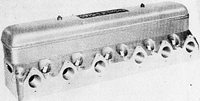
The top photo looks like an "IOE", or pocket valve conversion (as opposed to OHV, since the original exhausts are still used), as done to some Indian 101. This was also a popular design before 1930 - the all-conquering 1928-31 Excelsior 45 used it, and all pre-1930 H-D big twins.
The intake valve is overhead with a pushrod and rocker arm, the exhaust valve is sidevalve and upside-down, running right off the tappet.
To convert a flathead engine, the original intake seats in the block are closed with plugs (which look like valves), then milled flat (so they don't interfere with the sealing of the new OHV castings). The ports are capped (as shown). The intake rockers are positioned directly over the flathead tappets for best pushrod alignment. The entire intake port is in the new casting, which uses as many of the original head bolts as possible (water also? not sure), and as you can see it can be several separate castings, 1 per cylinder etc. This is nice because it saves you from making a really big casting (they can be "modular"), but each motor will be different depending on the bolt patter, valve seat position, etc.
The compression can't be really high since the chamber still must cover the exhaust valve, but it's an improvement. The intake rocker ratio (if used - they didn't seem to do much with that back then) increases intake breathing, the port stays cooler, and of course the intake port can now be far bigger, more direct and the valve can be truly huge - almost as big as the piston (if you wanted).
There are still some IOE conversions made for the Model A.