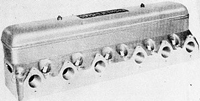
As far as a 1.94" valve pushing the limit of valve size in these heads before hitting water, I will have to say that I frequently installed 2.150" intake valves in our 292 race heads, and never once struck water. If people are installing a 1.94" and hitting water, they are sinking the valve seat much to far to form the valve seat. Also, sinking the valves in these heads kills the short side radius and its airflow, and will usually defeat the purpose of putting larger valves in to start with. Don't forget to open the bowl area up also when installing larger valves, if undone, it too will negate any gains you expect to see from installing larger valves. Just putting larger valves in by themselves will not usually show much increase in airflow or performance, and will leave the enthusiast with the impression that there isn't much potential to be had with heads or engines. Also installing some bolt-in "lumps" will greatly enhance the airflow, even at low engine speeds, so that too should be considered as an upgrade....
So this really comes down to the skill and knowledge of the machinist more then anything?
Also what is the theory behind the lumps, is it that they cause more turbulance in the intake and help the fuel atomize? or is that they cause a restriction in the intake to enhanced velocity?