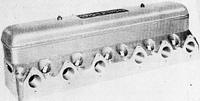
It largely depends on which cylinder head you are using to put the valves into. Naturally, the larger chamber 70cc+ heads will have a lesser shrouding effect than the smaller 50-ish cc heads. Also, the difference between a 1.90" valve, and a 1.94" valve in the same head will only be .020 bigger around the area closest to the edge of the chamber where shrouding is the most noticeable anyway. As for the swirl effect, that is greatly influenced by the shape of the port and bowl area. Ok Larry, im fixing to do another product endorsement for the lumps, so get your checkbook out(LOL). A siamese head as cast, has a flat floor with no short side radius to speak of, a huge bolt boss obstruction that breaks up the airflow, and all the way around is very undesirable for promoting and establishing any good traits we think are good for creating swirl before it enters into the bowl and then the cylinder. When you remove the bolt boss, and add the lumps, you make the air direct itself into a more desirable direction and flow pattern, and it also speeds the air/fuel velocity up, which is very desirable especially at low valve lifts and RPM's. Its then up to the shape of the chamber to maintain and complete the swirl effect up to the point of combustion. The piston top shape also contributes to this as does the quench area. In a perfect world, you would like to see a nicely formed SSR, a bowl area enlarged to an appropriate size to match the valve being used, topped off with a shallow heart shaped chamber with a good tight deck height piston and tight quench clearance. Since none of the current siamese heads have a heart shaped chamber, this will require a person to physically reshape and fill it to achieve this. And rarely do many heads exhibit more than two or three of these other characteristics without having to alter the head. So, many of these things are good to have in a cylinder head, but are not an absolute requirement to have a decent performing street or race engine.
I currently am making a new toy for the many do-it-yourselfers out here on the forum, to have the ability to actually "see" the airflow into the intake ports so that trouble areas can be detected and corrected, and also see if the chambers are creating swirl as it enters the cylinder. Before, you had to rely on someone with a flowbench to be able to do this for you, and this is only if they have a velocity probe. But then you still couldn't actually "see" what the air is doing in the ports or chambers.