Hi Maldonado,
That's a good question, and the answer is usually guarded by very large men with guns and dogs... jk

Seriously, the lower the ratio of intake to exhaust flow, the better the flow is to the turbo. If we just use LeeLites numbers from his testing, we can make some pretty good comparisons against reasonable numbers available for aspirated performance engines.
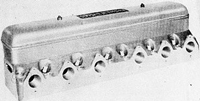
Lee got stock flow rates of 177 cfm intake and 147 cfm exhaust using an unaltered head. Dividing the two gets a ratio of 1.204 intake : 1.0 exhaust. Consider a quality racing head with numbers in the range of 300 cfm intake and 240 cfm exhaust. Those flow numbers are available for v8's and inlines if you have the money. That's a ratio of 300/240 = 1.25. The number is somewhat equal, but the ratio went UP. For a turbo, that's not the right direction.
One of turbochargings' pioneers was a guy named Ak Miller. He used a stock-head 230 with 8:1 compression in a 64 or 65 Nova with a suck-through side-draft carburetor from a Corvair, and did very well with it (even had a points dizzy at one time!). He did NOT have an intercooler, but I believe he did use water injection on the street, and claimed somewhere around 275 rear wheel hp using racing gas.
There is nothing wrong with a 1.20:1.0 ratio. If you want phenomenal performance, of course your flow numbers need to be larger than stock. You should also build a custom exhaust manifold to put the turbo within 0.5 meter of the farthest exhaust valve. A custom intake that uses about 0.15 to 0.20 meter-long approach runners to the head is appropriate (the length is AFTER THE LAST BEND), and use the biggest intercooler you can afford to get the intake charge as cool and dense as possible. A water-to-air unit (using ice water on the drag strip) is smaller and more efficient than an air-to-air type. Use fuel injection, preferrably port style. It can be gang-fired or sequential fired. There is some specific geometry to that part of the setup, and needs to be given close attention. If you can't use FI, then a blow-through multiple-carb setup should be installed with the carb butterflys no more than 10 to 15 cm from the head.
Your flow numbers and their ratio is not as important as you might think. What IS important is the temperature of the intake air, the air-fuel ratio, the ignition system capability, your base compression ratio, the cam profile, how restrictive the exhaust pipes are after the turbo, and whether you chose the correct turbo and turbine A/R ratio for the combination of items listed.
Give a holler if I didn't really answer your question...

------------------
David
newbie #4153