Hi Panic . . .
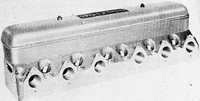
I have always been under the impression that the 'engineering' around holes between the water jacket in the head and the water jacket in the block was largely limited to the 'gross area' of the openings - not necessarily the placement. After all the water pump is pumping against a closed thermostat - so the entire water jacket in the head is filled by pressure.
I was also under the impression that the low pressure event created by the thermostat opening was always engineered to allow less flow then the holes between the block and the head - so even in this state the entire head is being filled with coolant faster then the thermostat is letting it escape.
With this design principle - I don't see how specific placement of holes could create/prevent overly hot spots in the head. Hot spots would always have been addressed by water jacket thickness not flow (given the remote placement of the thermostat). That said, I would agree that in 'general' these openings need to be spread about for an even flow - but the specific placement seems more likely a result of matching the machining to the casting decisions - then to some sort of 'flow strategy'.
Personally, I have never been able to figure out why they ever went to the trouble to press in copper tubes after machining certain holes. And like you have never found anything in the literature that discusses the thinking behind this practice.
Moreover, I am a firm believer in the male dog theory of superficial engineering change: Every mutt that is given an opportunity - will lift his leg and leave his mark on the design . . . beneficial or not.
regards,
stock49